Film & TV

"I have a competition in me. I want no one else to succeed."

Musings and reviews

See all

Eternal Sunshine of the Spotless Mind

#film-tv

Jul 13, 2025

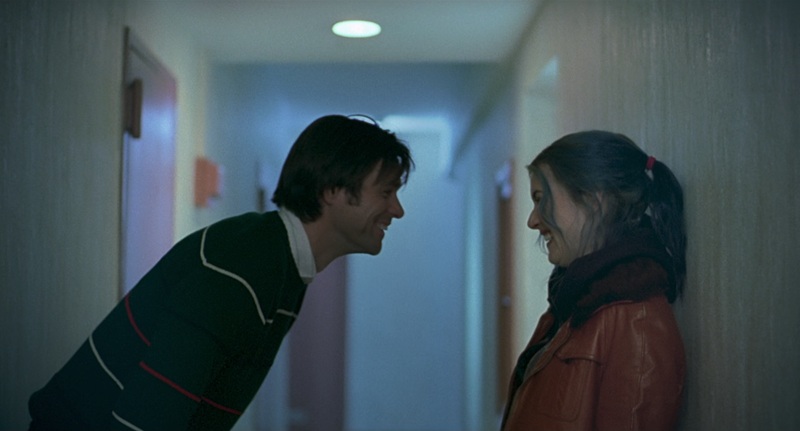
Joel and Clem laughing in a hallway in Eternal Sunshine of the Spotless Mind

This review contains spoilers.


I was upset when Eternal Sunshine of the Spotless Mind’s final chapter unraveled — as Joel went through the motions of the movie’s opening scene, and met with Clementine in Montauk and rekindled their relationship. The movie presents this as a sweet love story, a romantic reunion produced by Joel’s sheer subconscious love of his ex-girlfriend; but I hated that he was rushing back to a person who had chosen to erase all memory of him without even the dignity of breaking up with him first. This is a cruel and abusive act (even if the victim likes your impulsiveness), like the worst possible version of ghosting a long-term partner without warning.

The movie redeemed itself when it showed Joel and Clementine confronting their former qualms about each other. There is wisdom in their choice (at Joel’s urging) to try again anyway. It is not unlike what many already do when starting a relationship, even without the benefit of knowing how it will turn out. As Clementine says, getting bored with people is what she does. She doesn’t need a recording of herself to guess where any relationship she has might head. And as experienced people (should) know, the honeymoon phase doesn’t last forever.

All relationships eventually face challenges, uncertainty, the risk of stagnation. When Joel is undeterred by what the future seems to hold, he represents every person who has ever thrown themselves at a relationship for the sheer love of the experience itself, despite knowing it might not last.

Most things don’t. But they’re still worth having.

Sirens

#film-tv #review

Jun 03, 2025

Michaela looking like a cult leader

This review contains spoilers.


A woman attempts to rescue her sister from a cult whose leader may have supernatural powers.

If you began watching the Sirens miniseries on Netflix because you were intrigued by this premise, you may have been surprised by how the short five episodes unfolded. Just as a siren might lure an unsuspecting sailor down a deep dark ocean, show creator Molly Smith Metzler immerses viewers in a story with more depth and grit than seems on the surface — but one utterly lacking in supernatural elements.

Some viewers were disappointed. Perhaps the bait-and-switch was a tactic to get people sufficiently invested in the story to keep watching even after it turns out the show isn’t what it seems. But that would be doing it a disservice, because one of the story’s central themes is exactly that: things are not as they appear.

Unreliable perspectives

Simone and Michaela looking off camera

Most of the major characters in Sirens are terribly unreliable storytellers. In the opening episode, it is Devon who drives the narrative. She believes her little sister, Simone, to be in trouble — in the grips of Michaela, a cult leader and potential murderer. Consequently, the story is framed with that perspective, tinging all of Michaela’s actions with sinister intent, and serving as the hook for viewers.

But Simone is not in trouble. Devon, who saved her sister from their mom’s attempted murder-suicide when they were children, and subsequently spent years taking care of her, is only accustomed to perceiving Simone as being in need of rescue (and likely associates motherly attachment with murder). Simone is not actually in any danger, even if she is actively evading this extremely traumatic past. Michaela is rich, eccentric, controlling, and paranoid, but neither a cult leader nor a killer. She bears no ill intent toward Simone. In fact, she feels a kinship to her, having also lost her mom as a child.

After a tough argument with Simone, Devon’s perspective of her sister’s situation finally changes, and along with it the show’s framing of Michaela’s behavior, which becomes more positive and wholesome. Ironically, she is most like Devon — they were at a similar age when their moms died, and both have a caretaking streak. Michaela, like Devon, is genuinely invested in helping Simone, and also shows compassion for their dad, Bruce.

Bruce, who suffers from early-onset dementia, is another potential victim of unreliable storytelling. Simone tells Devon that their dad drove their mom to suicide through neglect. At age seven, Simone would likely understand little about the true circumstances that caused this tragedy; but Bruce’s neglect is what she herself experienced after her mom’s death, and it nearly killed her. So just as Devon believes her sister must be in trouble because that is the side of Simone she knows, it’s easy for Simone to believe her dad neglected her mom because that is the side of Bruce she knows.

Bruce, for his part, later says that, “Everything I tried, it just made [her] sadder. I didn’t know [she was] at that point.” He also suggests his wife had a challenging mood disorder. Regardless of his actual responsibility, Simone’s belief in his responsibility tells us more about who she is in the present than who he was in the past.

Another example of questionable narration comes from Peter Kell, Michaela’s billionaire husband. During a heart-to-heart, he tells Simone that Michaela estranged him from his children. At this point in the story, when Michaela is still the suspected primary antagonist, Sirens is working hard to frame Peter in a sympathetic light, and it’s easy to take his claim at face value. But later, when he brings this accusation to his wife directly, she reveals her own view: “You ruined your relationship with your children. You pursued me. You left Jocelyn. You let them demonize me.”

Who is right, and who is wrong? Sirens is not interested in doling out subjective answers. It would rather explore how the character’s past traumas alter their perception of present reality — and how they behave when that reality is challenged.

The physical impact of trauma

Devon sits, looking upset

There is a scene in which Michaela gets Devon to express her guilt over abandoning her sister to go to college, and her grief that nobody took care of her as she was growing up. During this exchange, the camera on Devon — from Michaela’s perspective — is clear; but the view of Michaela — from Devon’s perspective — is increasingly blurred and out of focus, until the whole scene takes on a hazy, dreamlike quality. Michaela touches Devon’s nose, who then appears to regain consciousness much later, in a different place.

On the surface, it looks like trickery; confirmation that there are indeed supernatural elements at play — especially as it occurs at the halfway point of the show, before it’s entirely clear what Michaela is all about. But if she has any magic powers, it’s only in her ability to get people to open up.

As those who have done therapy may know, exploring trauma can be very like Devon’s perspective in that scene: everything loses focus, the world closes in, and time passes without notice. You get stuck inside your own head and the body feels like some faraway thing. When your attention rejoins the world, it can be like coming out of a groggy sleep. Sirens exaggerates this for effect, but the idea is spot on.

Another scene that mirrors this experience is when Ethan, after Simone rejects his marriage proposal, accuses her of having pushed him off a cliff, grown wings, and laughed about his demise. This is an outlandish perspective, a consequence of drunken stupor and childish ego. Nonetheless, it is a version of the reality-bending that trauma can cause. Just as when severely drunk, trauma can make you perceive things that aren’t there, hurt yourself, and wake up later with unreliable memories and an aching body. It may lead you to say things that sound totally insane to everyone else.

Ethan’s drunk scene also features the out-of-focus camera from Devon’s confession, though much more subtly; and the effect is used again, more noticeably, when Simone and Peter have panic attacks — yet another experience that can be linked to the feeling of trauma. The body comes under assault. The mind is hijacked. People who have panic attacks say that it can feel like dying.

We all have different experiences and perspectives in life. We have complicated, often competing emotions. We struggle to communicate. Achieving understanding, both of ourselves and of others, is an ongoing labor. And when trauma is involved, these normal human complications are intensified. What was once an emotional puzzle can become an incomprehensibly tangled mess. Communication becomes not just challenging, but potentially so triggering as to incapacitate. Memory is impaired. Reality takes on a new form.

Sirens gives us examples of how strongly individual perspectives can differ, and the difficulties that arise when those perspectives clash. How does one communicate with a person who, as soon as the critical subject is raised, completely shuts down? The show also tries to bring you on the whiplash ride of discovering paradigm-shifting information. For example, Simone’s withdrawal from her family can initially seem callous or even cruel; yet when we learn what she experienced at the hands of her father, it instead seems cruel of Devon to try to bring her sister back into his life.

Devon eventually processes this, but it takes her some time. Synthesizing differing realities is hard, and in Sirens, as in life, only some succeed at it.

Who is the siren?

Devon and Simone smiling

When the show begins, it appears that Michaela and her posse of lavishly-dressed women are likely to be the eponymous sirens. Then, the two sisters lay a better claim to the title. The hypersexual Devon leaves behind a wake of desperate men; in one episode three of them chase her on the beach at the same time. Meanwhile, Ethan, a wealthy man known for serially ghosting women, proposes to Simone, who later has an even richer man leave his wife for her.

But not even the sisters have the sheer pull of Peter Kell himself. The Big Cheese. Thanks to his wealth and power, he is the true siren of the show.

Initially, it is Michaela who seems to hold the power on the island. A lot of it is exercised via Jose, the property manager, who is always nearby, ready to do her bidding. Gradually, it becomes clear that Michaela’s power is actually derived from her husband — crystallized when Jose refuses to help her pry into his affairs because, as he reminds her, he works for Peter, not her.

When giving advice to Simone on how to respond to Ethan’s proposal, Michaela tells her a personal story about the cost of becoming Mrs. Kell. “When you’re a Mrs. Somebody, your life gets huge, but you get very tiny,” she says, adding that a divorce would lose her everything that matters to her. “I work for him. We all do.”

Consequently, she guides Simone away from the wealthy Ethan, toward forging her own path — toward New York City, where she could chair Michaela’s foundation, build a career, and gain independence. One might conclude that if Michaela had a second chance — if she could go back 13 years to before she signed a disadvantageous prenup to marry Peter — she wouldn’t do it again.

Yet her own ability to give Simone career opportunities is directly derived from Peter’s wealth. And when Michaela acquires an incriminating photo of Simone and Peter that could help her pursue an at-fault divorce, she instead chooses to fire Simone and stay Mrs. Kell. Despite the downsides, the gravity pull of Peter’s fortune is simply too powerful to resist. When Simone eventually replaces her, she holds no grudge, because she understands the siren call of wealth, status, and power. “I had a good run,” she says. Now it’s someone else’s turn.

As for Simone, despite “worshiping the ground” that Michaela walks on, the latter’s ultimate value to her is as a door to Peter’s wealth — and through it, escape from her family. Simone’s lowest points in the show are when she believes Michaela will fire her, which causes her to have a severe panic attack; and when Michaela does fire her, which puts her in a catatonic state. Yet Michaela is not responsible for this distress, as Devon initially believes; rather, it is Simone who is unable to cope with her life off the island. In the end, rather than face her trauma, her solution is to bypass Michaela to go straight to the source of her wealth — even if it means stripping it from her.

Finally, the property staff complain endlessly about the difficult and stressful work, but also stick around. Patrice, the head chef, has been there long enough to cook for 16 annual galas. Jose has been with Peter for 19 years. He doesn’t think twice about destroying that incriminating photo for Peter, even when he knows it means Simone — whose departure the entire staff had joyously celebrated — will be staying after all. Despite the challenges, they remain loyal to Peter. Everyone wants a piece of the Big Cheese.

A personal island of reality

Peter with a glass of champagne

Peter, more than anybody else, does whatever he wants. He controls Jose, overrides Michaela’s rules about bread, convinces Simone’s family to stay with the promise of celebrity visits, takes the woman his best friend wanted to marry, and kicks out his wife during the gala she organized. The party simply goes on without her, as if she’d never been there at all.

Though he says he didn’t get to see his kids because of Michaela, it seems like a cop-out. In the beginning of the show, it’s easy to believe Michaela used her sinister, siren-like powers to lure Peter out of his previous marriage. But it’s more likely he let Michaela take the blame for his own choice to leave. Eventually, with age and a new grandchild, he gets to a point of wanting to prioritize seeing his family again, and so … he does exactly that — while conveniently blaming his wife rather than himself for not having done it sooner, and retroactively deciding that he was never really happy with her.

Peter doesn’t seem particularly villainous or even intentional in his manner. He glides through life, a bit high, a bit clumsy, a bit oblivious to his privilege in the way that people born rich usually are. Unlike Devon or Michaela — who have to messily figure themselves out as their realities clash with that of others, and who are eventually forced to learn and change — Peter can simply deny whatever he finds uncomfortable. If people don’t go with it, he can replace them with people who will. In a way, he’s not very different from Ethan. When they no longer find their women agreeable, they grow upset and call them “monstrous.” Ethan is clearly accustomed to getting his way, and so is Peter; he’s simply less dramatically petulant.

In a story that is all about trauma and perspective, Peter’s wealth buys him a luxury few can ever afford: to never have to leave his own reality. Money grants Peter refuge from rivaling perspectives, from ever having to do anything truly difficult, and the power to let go of anything or anyone he no longer likes. This is the escape that Simone pursues through him; but it is only a borrowed privilege, contingent upon remaining in Peter’s good graces. And it is the same escape that Devon ultimately declines.

Leaving escape behind

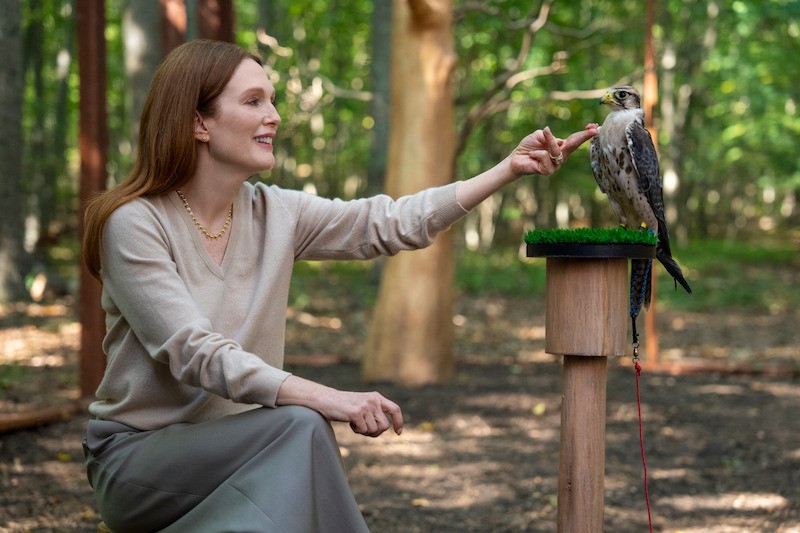
Michaela with a raptor

Throughout Sirens, Devon is presented with a choice: to escape with a sailor, or go back to taking care of her dad. (Ironically, it is the sailor luring the siren, not the other way around). She struggles with the decision because she cannot find peace either way, just as she could not find peace in abandoning or taking care of Simone when she was younger.

During her time on the island, Devon goes on a roller coaster of vulnerability, reflection, and change. Eventually, she recognizes the pride she earned in caring for Simone and is able to synthesize her conflicting inner selves. She accepts that caring for her dad is caring for herself, and she leaves the island feeling more prepared to do it.

Michaela can be seen as an older, more actualized version of Devon. She is also a caretaker, but unlike Devon, she is extremely comfortable in that role. She cares for raptors and acts as a quasi-therapist for both of the sisters and even their dad, including in difficult circumstances. When faced with divorce, she asks to keep the aviary. “Nobody knows how to take care of these birds but me.”

Simone, on the other hand, is rendered catatonic by the mere thought of caring for her dad (understandably so). Her trauma is too huge to accommodate the needs of others. So she escapes with Peter. She can be in his bubble, literally on an island of their own.

In the beginning, Devon comes to the island looking for Simone, who represents escape; but what she finds instead is Michaela, and it is with her that she leaves, having finally made peace with her choice.

Severance

#film-tv #review

May 29, 2025

Shot from Severance S1 intro animation

This review contains spoilers.


The followers of Kier Eagan, founder of Lumon Industries in the hit TV show Severance, bear a striking resemblance to real-life religious believers — from the weirdness of their rites to the abuse they inflict on others and themselves.

Fixated on the founder’s life, they shape language and traditions that reflect his words and deeds. They revere his texts and relics, produce symbolic art and propaganda, and refer to him as though he were still alive, exerting his influence. The descendants of Kier are said not to die, but to “revolve.” It is also implied that most, if not all of his Followers were indoctrinated as children.

A recurring concern for the Followers is “taming the four tempers” — Kier’s version of the seven deadly sins. These tempers (Woe, Frolic, Dread, and Malice), it is explained, are more than merely present in people. They are the complete building blocks of every human soul. As with Christianity, this belief in one’s inherent impurity creates the battleground for perpetual war between the spiritual mind and the sinful flesh — a war that, like Jesus, only Kier has had the strength to win, and in so doing was ascended above man.

Kier taming the four tempers

Unbeknownst to them, the severed workers in Macrodata Refinement are soldiers in that war. Their assignment is to sort numbers representing the four tempers; in Mark’s file, these come from his wife, Gemma. Lumon has been subjecting her many innies to painful experiments, then asking her outie what she remembers of them.

Her final test is in Cold Harbor, a room designed to be as triggering to Gemma as possible. Lumon hopes that her latest innie will nonetheless be totally unaffected, thanks to Mark’s work. “Refinement” of the tempers, though its exact function is still unclear, seems at the heart of Lumon’s ultimate goal of eliminating suffering itself.

In biblical terms, sin is often at the root of suffering. And as with the most fervent Christian or Muslim believers, the Followers are not concerned with merely conquering sin on a personal level. Their calling is to purify the world. As Jame Eagen tells Helly in the first season finale, “They’ll all be Kier’s children.”

Note on refinement

There is ambiguity about what "refinement" does. In the Kier mythology, every human soul can be measured by “the precise ratio” of the tempers inside him. MDR workers are tasked to sort four types of numbers (the tempers) into five categories, but it's not clear what those categories are or what sorting them actually achieves, other than it has something to do with the severance chip.

Because the severance procedure creates an innie, it is plausible they are identifying the composition of the human soul so that the severance chip can better delete it and thus create what is effectively a truly new human. However, it’s also possible that the temporal split is a separate function of the chip and that sorting the tempers serves some other, as yet undetermined purpose.


The weirdness of religion

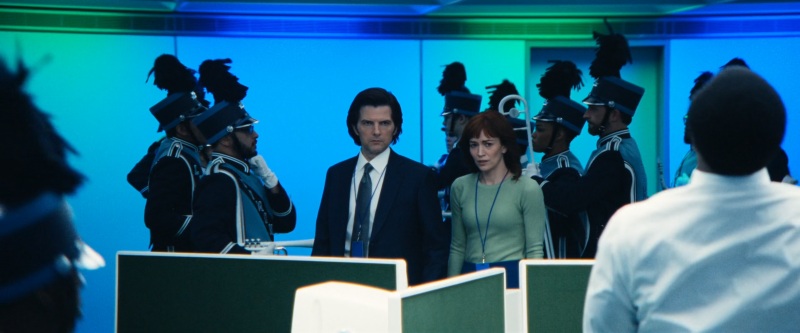
Marching band weirdness

Religious themes and messianic figures are nothing new in fiction. A compelling element of Severance is that it shows how religiosity makes people behave in ways that can seem utterly bizarre to nonbelievers.

The constant references to Kier, the aggrandizing propaganda, and the obsession with structuring all things according to his example are no weirder than real-life theists praising their god at every turn, getting on their knees to pray, following rules from a book of myths, and generally shoving every aspect of life through a filter of religious interpretation. It can make them appear severed from reality.

Milchik is probably the clearest example of this. In the show, he serves as both an enforcer of doctrine as well as a victim of it. His striving to act according to Lumon rules overrides any possibility of genuine human connection, and leads to a tone-deaf attitude that is often inappropriate for the situation at hand — like when he aloofly hosts a “retirement” ceremony for a worker who has effectively died, or energetically dances to a marching band for the sake of someone who clearly has no cause to understand the fanfare.

In addition to showing little empathy, Milchik’s persistent inability to read the room not only confuses the severed workers but repeatedly enables them to take advantage of him. He never seems to learn they have their own agenda and aren’t playing by the same rules. This is typical of real-life believers, who often struggle to reason outside the framework of their faith. Atheists may be familiar, for example, with theists who genuinely can’t understand that claims about the bible or threats of damnation have no effect on them.

Self-policing doctrine

Milchik confronted about verbosity

Most of the time, Milchik devotes all his energy in service to Lumon (the Church) and its doctrine. The myth, the rules — and the institution that upholds them — have supremacy over all. Including himself.

However, there are exceptions. Despite his efforts, he is only human. The suppression of normal emotion is unsustainable, and it is when that unnatural restraint fails that Milchik is at his most authentic. On those occasions, he is prone to expressing anger or annoyance, acting out against the severed workers who resist the doctrine, or against the superiors who relentlessly impose it upon him — such as when he tells Drummond to eat shit for making him apologize for his verbosity.

Drummond’s own fixation on Milchik’s choice of words might seem like targeted hostility, but is really a logical — if severe — carrying-out of a doctrine that abhors all excess. And in true religious fashion, doctrine is not only a thing to be impressed upon the naive — it must also be continually imposed among those who already believe.

Because any system that struggles against nature is inherently fragile. Nature will always resist. The system must be enforced at all times, lest it fall apart at any moment.

In their ongoing effort to “tame the four tempers” and adhere to Lumon code, the Followers thus police themselves and each other. They attempt to express themselves only in the prescribed manner and in prescribed doses, striving to be like the severed floor — the physical embodiment of Lumon’s ideal mind: cold, organized, compartmentalized.

Like the indoctrinated of our own world, Milchik is smothered by his own system of belief. He may occasionally find the strength for a gasp of air, for the briefest moment of assertion — though as is usually the case for those in his position, overthrowing the system itself is simply unimaginable.

Severed from virtue

Irving, Mark, Helly, and Dylan

While their minds are blank and thus fertile for religious influence, the innies are actually too raw to be properly indoctrinated. Their newness in the world endows them with the innocence and liveliness typically associated with children — who in our real-world religions are also absolved of sin, as they are too young to understand right from wrong.

Almost paradoxically, this causes the innies to be the only characters in Severance who truly embody Lumon’s nine core principles (mirroring the Christian seven heavenly virtues), such as cheer, humility, nimbleness, and wit. These virtues exist in the innies more than in the Followers of Kier, more than even in their own outies, who are themselves shown to be living drab, depressing lives.

Concurrently, it is the Followers who most lack the core principles. Though they have not undergone the severance procedure, they are nonetheless severed from their own selves. They are dogmatic and traumatized; shells of human beings whose innocence and healthy emotion have long been lost.

Harmony’s aunt tells her that as a child, she had the “fire of Kier” within her; yet in adulthood, she lacks all liveliness, speaking almost exclusively in low, monotonous tones. “Frolic,” the only cheerful of the four tempers, is tattooed on Drummond’s hand, a man without an ounce of gaiety. When Milchik or Natalie smile, there is no warmth in it. Jame Eagen, expressing the impact of Helly’s betrayal, says he “threw a tin of candies” to convey how badly he lost control. (As she says in response: “God, you’re fucking weird.”)

In Lumon’s demand for absolute control, the spirit of life itself — the “fire of Kier” that it so values — is precisely the thing its Followers must kill; just like the “verve” that Drummond seeks in the lamb only makes it eligible for slaughter.

Innocence reborn

Jame Eagen mouth agape

Jame also tells Helly that her outie once possessed that “fire,” which “left her as she grew.” Yet he witnessed the fire in Helly, the version of Helena that happens to be free of religious doctrine and abuse. This alone seems to have been enough to draw him to the severed floor so that he may see her, mouth agape, the way a tired, jaded man can find dreamlike beauty in a child’s innocence.

Is it a coincidence that Helly — the least reverent of the severed workers, who routinely laughs and scoffs in the face of Kier propaganda — is the spunkiest of all the characters in Severance? And that her shambling father — the highest living representative of the religious cult — has the least fire of them all?

This again highlights the unwinnable struggle at the heart of those religions that propose a good life requires opposition to one’s own sinful nature. In the biblical narrative, man doomed himself when he ate of the fruit of knowledge of good and evil. He must strive to do good, but a life truly without sin — and thus without suffering — is reserved only for the likes of god.

Man can only experience genuine innocence and be free of suffering when without the knowledge of good and evil — a luxury afforded only by young children, shortly after life begins. To be pure, to be without the suffering that comes from sin, one must therefore be reborn.

Helly R is born

Or severed.

Blade Runner 2049

#film-tv #review

Nov 02, 2021

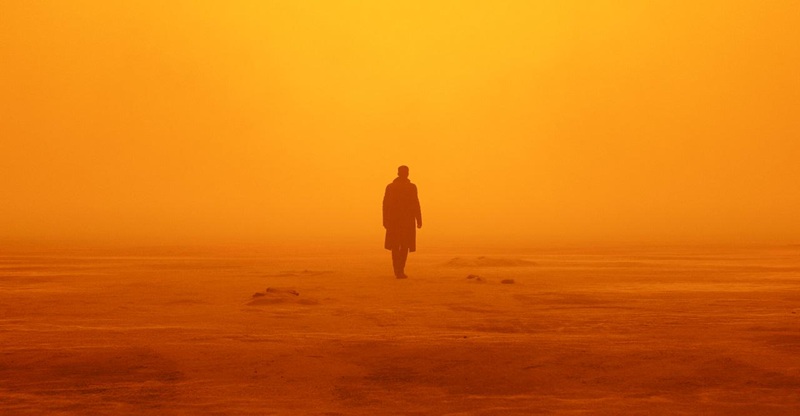
K walking into the desert in Blade Runner 2049

This post contains spoilers.

Genre: Science-fiction film


In Blade Runner 2049, K is a replicant — an android virtually indistinguishable from humans — who discovers his implanted memories are real, and begins to believe he may have been born rather than manufactured. This is an inversion of the original film, in which the true nature of Rick Deckard — who believes himself to be human — is left ambiguous.

Following a long, emotional search for his literal humanity, K learns he is only a replicant after all. The Chosen One trope is thus turned on its head and for K, it’s a crushing letdown — one that can also be difficult for the audience because BR2049 takes such great care to humanize the character.

Indeed, when K begins to believes he might actually be human, it’s easy for us to go along despite evidence to the contrary. K can read a million words a minute, perceive microscopic details, and withstand (as well as inflict) tremendous amounts of physical punishment. How could one see him as anything but a machine? Yet K is utterly, convincingly human.

Outside of those physical abilities, there’s truly little to differentiate him from anyone else. He eats, sleeps, and works for a wage. He lives among people. He bleeds. He struggles. He cherishes his memories and shares them in private. He longs for companionship and nurtures the only relationship he has, however artificial. During his journey of self-discovery, his gradual loss of emotional control — culminating into something like a full-blown breakdown — only serves to humanize him further.

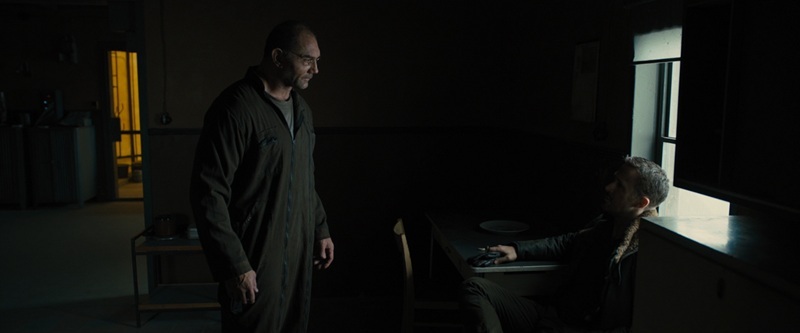
Sapper Morton facing K in Blade Runner 2049

From the beginning, K’s rich human experience seems to support his possibly unique origins. Even before he has any reason to believe he could have been born, K displays a plethora of human traits in BR2049’s wonderfully crafted opening scene: He falls asleep in transit, a small yet relatable thing; he shows respect for Sapper Morton’s property, even though Morton is a replicant he has been tasked to retire; and he displays genuine curiosity about Morton’s cooking before imploring him to cooperate, hoping to avoid the “hard part of the day” that clearly make him queasy.

Joi also hints that K has long engaged in self-contemplation prior to that encounter. And who hasn’t? The movie’s initial revelation — that a replicant has given birth — is likely little more than the catalyst for K’s long-brewing existential crisis, one driven by his very human need to be special. Having so dearly desired to be human, he leaps at the chance to confirm that reality. And when it crashes down upon him like a hurricane, his distress and ensuing depressive state once again only make him seem more human.

It’s all too easy for the audience to deceive itself, along with K, into believing he is. Indeed, faced with someone whose experiences are so incredibly human, how could one perceive K as anything less? And in the end, does it really matter that he’s not? The revelation that he isn’t human only crystallizes that he never needed to be. Like Roy Batty before him, he’s already “more human than human.”

Squid Game

#film-tv #review

Oct 22, 2021

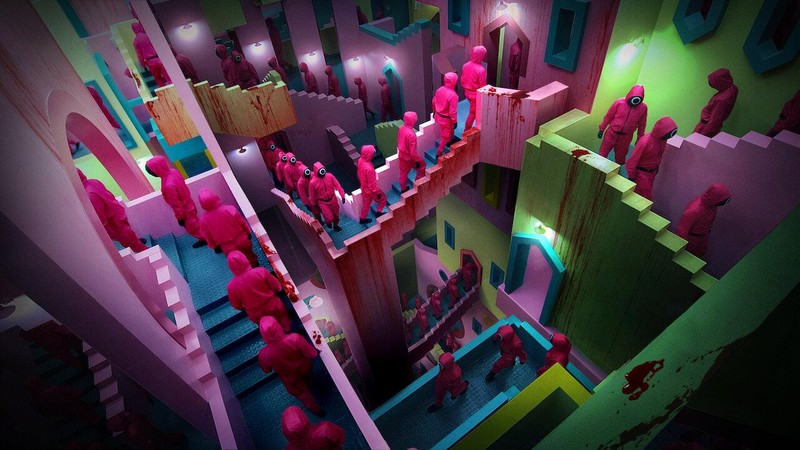
Enforcers in Squid Game walking on bloody staircases

This review contains spoilers.

Genre: Survival drama TV show


Capitalist rhetoric claims competition, free markets, and hard work are all it take to make a fortune fair and square, and that those left behind have only themselves to blame. In gory detail, Squid Game explores the cost of that competition and shows how, no matter one’s personal character, acquiring wealth in a capitalist system is necessarily unethical.

The organizers of the game make its participants a promise: Unlike in the real world, where they have little chance of getting out from under capitalism’s crushing boot, they each have an equal opportunity to win. At first, the promise seems genuine. When a player is caught cheating, the game overseer executes him and his abettors without a second thought. And the first game they play — “Red Light, Green Light” — has a pretty fair set of rules.

But the pretense of fairness breaks down quickly. Players had not been told they would be brutally murdered should they lose. And it’s only when the survivors express the desire to leave that the prize is literally dangled above their heads, its message clear and vicious: the more people die, the more money you stand to win.

The game’s creator absolves himself of responsibility, noting the participants agreed to the terms. He conveniently ignores that as a money-lender, he is guilty of contributing to the pressures that led players to accept the terms in the first place — and that his recruiters leveraged the hopeless circumstances he created to convince them to join.

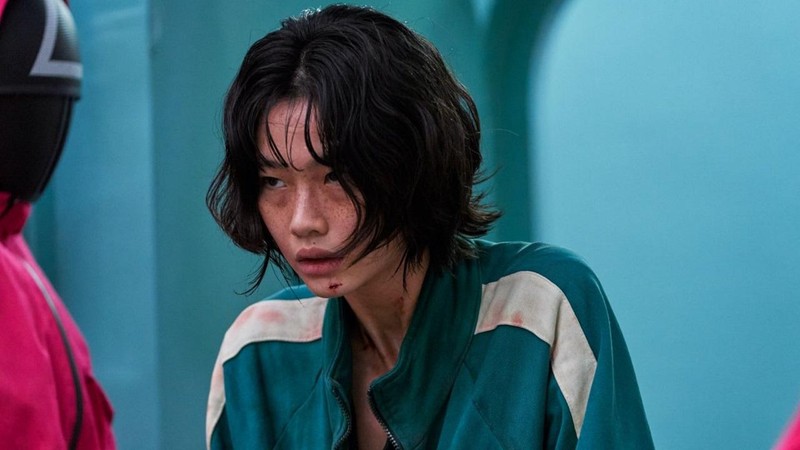
Jung Ho-yeon looking tired in Squid Game

By the time players get to the bridge game, it’s overly clear the entire endeavor is not, as advertised, a respite from the capitalist system, but rather a microcosm of it. The only way to win is by making the right connections, ruthlessly eliminating and backstabbing the competition, and getting extremely lucky.

In the end, the last man standing is neither the savviest nor the most able individual. He could have been any one of the others who died. And his reward, a glowing pot of money, has come at the cost of hundreds of lives and his own humanity. What were the alternatives? To die or not participate at all — the latter an arguably worse fate as shown in the only episode, entitled “Hell,” that takes place entirely outside the games. In real life, though, not participating in capitalism is rarely an option.

In Squid Game, like in Parasite, the lower class fight each other for the scraps of the rich, who got rich by profiting off of them. The system is purported to be fair, but has perverse incentives and primarily rewards luck and exploitative behaviors. To merely fight for one’s survival is to actively participate in the demise of others.

Even though the winner was arguably the nicest person involved, he understands despairing at the blood spilled in the name of survival does not wash his hands clean of it. Consequently, he can’t bring himself to use the money. Spending it would be tantamount to spending those lives once more.

The Wire

#film-tv #review

Oct 20, 2021

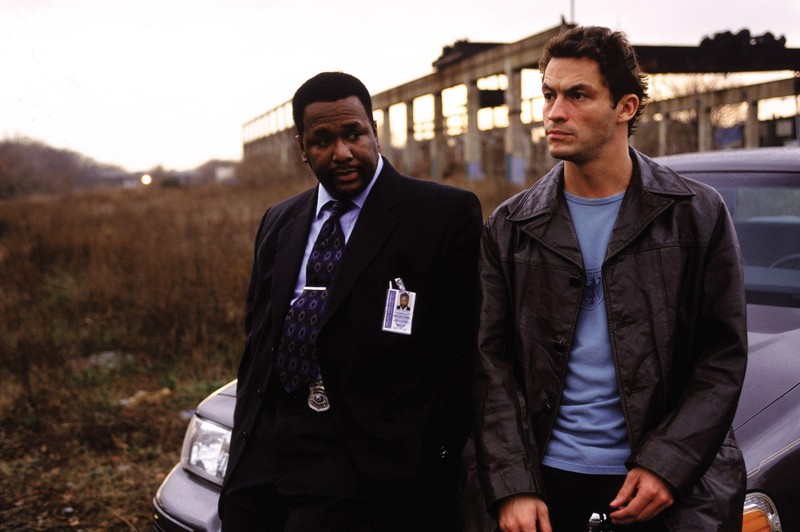
The Wire's Bunk and McNulty

This review contains spoilers about the show’s themes, but no plot spoilers.

Genre: Crime drama TV show (five seasons, 60 episodes)


When The Wire first aired, it didn’t really rate. It won no awards, the viewership was nothing to write home about, and the critical response was good but not phenomenal. Yet today, almost every list of the greatest TV shows of all time feature The Wire somewhere in the top five. Why?

Many of its qualities are timeless. Its portrayal of police work, poverty and drug culture, education, and local government is not only totally honest and unpretentious, but also deeply human. It has a talented ensemble cast of actors who accurately represent Baltimore demographics. And then there’s The Bunk and all of his memorable zingers.

But The Wire is more than just a cops-and-criminals show. Over five seasons, it explores how institutions betray the people they’re meant to serve and the impossible challenges faced by those wishing to do something meaningfully good within those institutions. It’s an unusually realistic look at hopeless circumstances many Americans will find all too familiar.

Though the Baltimore Police Department takes center stage, it’s not the only star of the show. The department’s stories are part of an impressively consistent and well-written narrative thread that runs through all five seasons, weaving itself through those of other important institutions: the port union, the school system, the media, the courts, and of course, the criminal organizations.

Their parallels are ever transparent. Gangs share eerily similar hierarchies as the legal administrations tasked with taking them down — and are often, through backdoor handshakes and laundered money, more connected than it would seem.

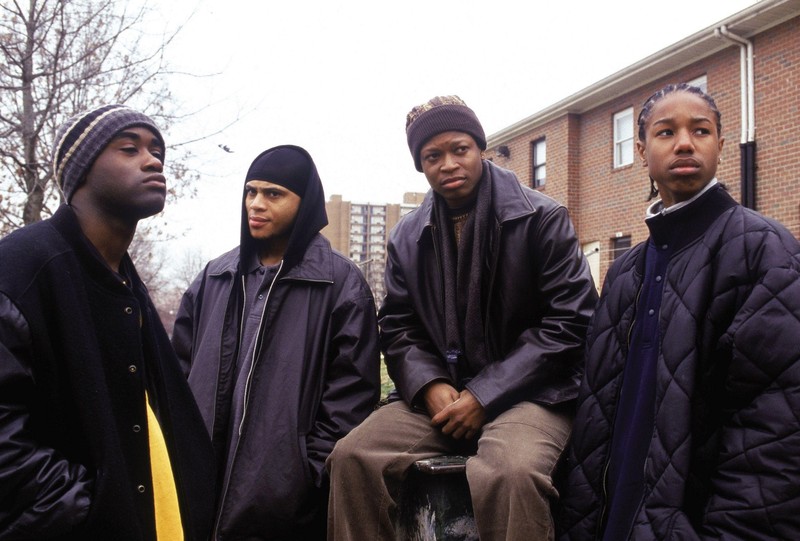
The Wire's season 1 "corner boys": Poot, Bodie, D'Angelo, and Wallace

And just as street-level thugs “stand tall,” silently eating charges to protect so-called friends whose loyalties end as soon as it is convenient, so too must corrupt politicians stand tall to avoid exposing their fellow white-collar criminals. There’s no such thing as a corrupt person in power working alone. Everyone’s got a hand in somebody’s pocket.

For all the small victories and feel-good moments peppered throughout its 60 episodes, The Wire ends on a bleak note. Its final message is unambiguous: nothing really changes. There are simply too many cogs in the machine, too many perverse incentives, and too many conflicting interests pulling in all directions.

If you have good intentions, institutions will grind you down until you choose to leave, are made to leave, or have nothing left of your former, optimistic self. The only way to get in a position to enact real change is to make so many deals and compromises that, by the time you’ve finally gotten into that position, you’ve essentially traded all its power away.

Almost two decades after The Wire first aired, Americans have long lost any trust that institutions have got their backs. Society is reaching all-time high levels of apathy and cynicism. More than check all the boxes that make good television, The Wire resonates powerfully. Let us hope it eventually falls down the ranks in those greatest TV show lists, not because newer and better ones are released, but because it stops being so goddamn real.

Midnight Mass

#film-tv #review

Oct 18, 2021

Monsignor Pruitt walks in church in Midnight Mass

This review contains spoilers.

Genre: Supernatural horror miniseries


Midnight Mass is a series about guilt, grief, and a blood-sucking vampire. It’s about the struggle to reclaim one’s life after addiction has taken it over — whether that addiction is to alcohol, blood, or even self-pity; and about the strange, barely disguised cannibalistic undertones of Communion.

It’s also a meditation on the ways religion can pit people against each other just as easily as it can unite them. How scripture can be wielded against the faithful, by both good and bad actors, to justify almost anything.

When Monsignor Pruitt first encounters a vampire, it attacks him and drinks his blood. After initially leaving him for dead, it changes its mind and feeds Pruitt its own blood. Because this has the side-effect of bringing the old man back to the prime of his life, he concludes the vampire is actually an angel. Already, Pruitt’s need to fit experiences within the framework of his faith causes him to ignore several glaring problems.

Hoping to spread this gift of rejuvenation, Pruitt brings the “angel” to his hometown on Crockett Island. He then inadvertently dies and comes back to life as a vampire himself, cursed by skin that burns in sunlight and a vicious thirst for blood. Despite these alarming symptoms, he doubles down on his plan to spread the condition to everyone on the island.

A central theme of Midnight Mass is how faith can be hijacked to enable otherwise well-meaning people to engage in this type of questionable behavior. With the backing of scripture, Pruitt convinces himself and the faithful of Crockett Island to go along with an increasingly gruesome plot. Religion is shown to be vulnerable to becoming a vessel for horror, whether unintentionally (as demonstrated by Pruitt) or intentionally (by Beverly Keane).

The rejuvenating vampire blood is used to create apparent miracles. Biblical passages describing the fear angels inspired in those they visited seem to conveniently explain the vampire’s terrifying appearance. And when Pruitt experiences mindless bloodlust for the first time, he decides God must have taken control of his body. It’s easier to deceive oneself than to look upon the face of hard truth.

Among the few who do not fall prey to this Catholic self-deception are, unsurprisingly, a skeptic, a scientist, and a Muslim. The temptation to find comfortable explanations that avoid challenging an easily-held belief is something we all know. Exercised well, skepticism and scientific inquiry can be tools for fighting that temptation.

But when the risk is not just to a single belief but to one’s entire understanding of reality, the mind can grasp at anything it finds to protect itself. Faith cannot allow doubt to creep in and take hold, because that doubt risks becoming the hammer that shatters the whole thing. Instead, it can only double down on itself — more faith, rewarding itself for furious belief in the unbelievable. The alternative, for those who have only ever had faith to lean upon, is like a void, too dreadfully absent of answers to even contemplate.

On Jon's fate in Game of Thrones

#film-tv

May 28, 2019

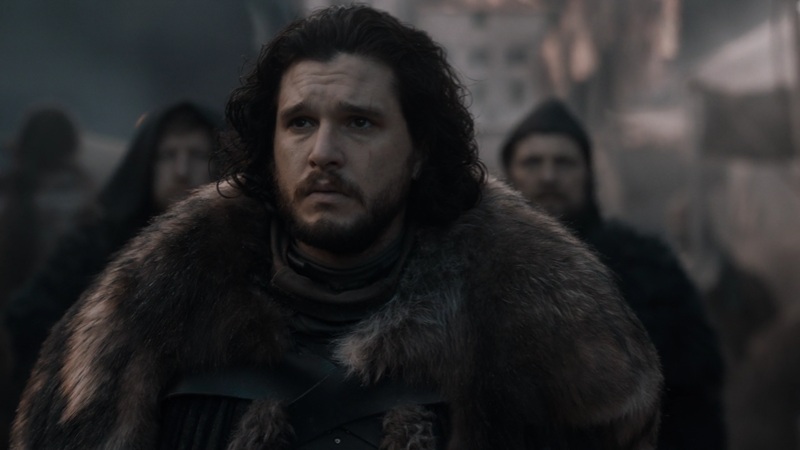
Jon squints at the North

There is so much to criticize about the eighth and final season of Game of Thrones that after writing that long tirade about S8E03, “The Long Night,” I decided there was no point in making further posts about the remaining episodes, as their flaws would already be well explored by just about the entirety of the internet.

And indeed, the eighth season has already been pored over and meticulously picked apart to such a huge extent in the last few weeks that adding yet another rant about the whole thing seems like a waste of energy. However, I had begun writing this post the day after the finale and I’m not about to delete it, so I decided to limit it to addressing just one of my main gripes about S8E06, “The Iron Throne”: Jon’s fate.

Bitter, not sweet

Jon cries over Dany

Most Game of Thrones fans will have heard the claim that George R. R. Martin intended for the series ending to be “bittersweet.” Though the finale lacks just about anything sweet, I would not be surprised if Jon’s fate in the books is indeed planned to be about as bitter as in the show — with the crucial exception that it would be more understandable to the readers than it was to the viewers.

I think that by the end of the series, Jon is meant to be a broken man, or at least a very tired and disillusioned one. He fulfills the Azor Ahai prophecy that has him plunging his sword into the heart of the woman he loves to save the world, but the act of doing so shatters him. Exile, if self-imposed, would make some sense here.

Jon has obstinately toiled and self-sacrificed since the start of his story, even literally dying for a cause he believed in. He’s been in the thick of constant violence and death, and he’s tragically lost both of the women he has loved. It would not be surprising if, faced with a choice, he would want to finally have some peace away from all the war and the politics. He’s the Prince That Was Promised, not the king to be.

Jon looks up

Unfortunately, not only does the show rob him of that choice for unbelievable reasons, it also makes no effort to make us understand his mindset. The love between Dany and Jon is poorly established, and the actors’ on-screen chemistry is lacking — it’s light years removed from the relationship between Ygritte and Jon earlier in the series. As a result, when Jon kills Dany, we don’t feel the full impact it should have on him.

The only indication we get of Jon’s inner turmoil is that he looks sullen all of the time. But this isn’t exactly a revelation: He’s been like that during most of the season even at the supposed height of his love with Dany; he is already known for brooding (Tyrion makes a dumb fan-service meta joke about this in Season 7); and crucially, Kit Harrington’s performance isn’t any different before and after he kills Dany.

Before the act his demeanor is largely muted, and after the act it follows the same pattern in the little screen time he gets. I understand that Jon was supposed to be in growing denial about who Dany reveals herself to be (leading to a confusing scene with Tyrion in which he leads by saying he won’t even try to defend her attack on King’s Landing, only to then immediately defend it), but throughout Season 8 as a whole Jon seems to have been completely sapped of any life and personality, though the latter can be applied to most of the franchise’s characters.

Jon looks at Grey Worm

Presumably, before Jon kills Dany he is brooding because he feels conflicted about their relationship, then he is brooding because he is in denial of her increasing “madness,” then he is brooding because he knows he has to kill her, and finally he is brooding because he has killed her. All of this coming from a character who is generally broody to begin with. This means that outwardly, it’s difficult to grasp Jon’s emotional progression; how we started with someone who was King in the North and had a claim to the Iron Throne, to someone who would want to go into exile. Worse, we get absolutely no insight into what Jon thinks or believes after he kills Dany.

If Jon had merely been presented with a choice, it would have been an opportunity to show Jon’s mindset and motivations after fulfilling the Azor Ahai prophecy. But apparently, setting up Jon to choose exile and doing so in a way consistent with his character was a pointless endeavor from the perspective of writers David Benioff and D. B. Weiss, who instead came up with a bewildering alternative: Make him take the black. Send him back to the Night’s Watch and thus force him into exile instead.

Not only does this rob us of a good potential character moment, it makes absolutely no sense. What Night’s Watch? The men of the Night’s Watch are dead, the Wall is broken, and there’s nothing left to watch but the snow. Even the writers don’t seem to believe in their own excuse to send Jon away, because he never takes the black anyway.

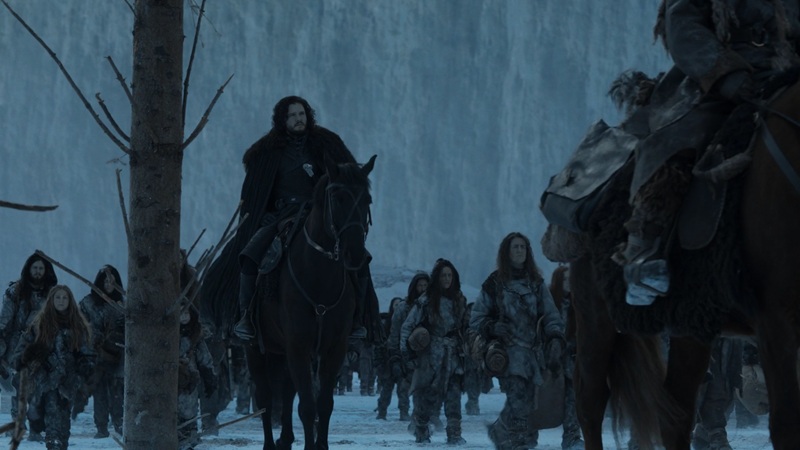
Jon riding beyond the Wall

Instead, he goes straight beyond the Wall with the wildlings, which is also confusing. We spent seasons establishing that the wildlings want to come south of the wall, not just because of the Others but also because — surprise — living in a tundra sucks. Jon had even offered them lands when he convinced them to come to the Wall with him. Why in the world would they all go straight back beyond the Wall?

And finally, why would Jon have to go into forced exile in the first place? The only people who wanted him punished were the Unsullied — a small group of people who should be in no position to make demands. Not only are they the remainders of a tyrant’s army, they leave to Naath right away, presumably never to return. Is there anyone left in Westeros who wouldn’t want Jon around?

The man killed a mass murderer who he loved for the sake of the people. He should be hailed as a hero. There’s quite literally no reason he should be forced to take the black. Self-exile would have made some sense, but instead we got this rubbish.

This is all on top of the fact that Jon is still the rightful heir to the throne, which apparently no longer means anything because, supposedly, the “wheel” has been broken, even though it’s painfully obvious it really hasn’t been. But now I’m getting into other issues about the episode and the series, and I’ll just stop there.

Jon looks at Tyrion

The Long Night

#film-tv

Apr 19, 2019

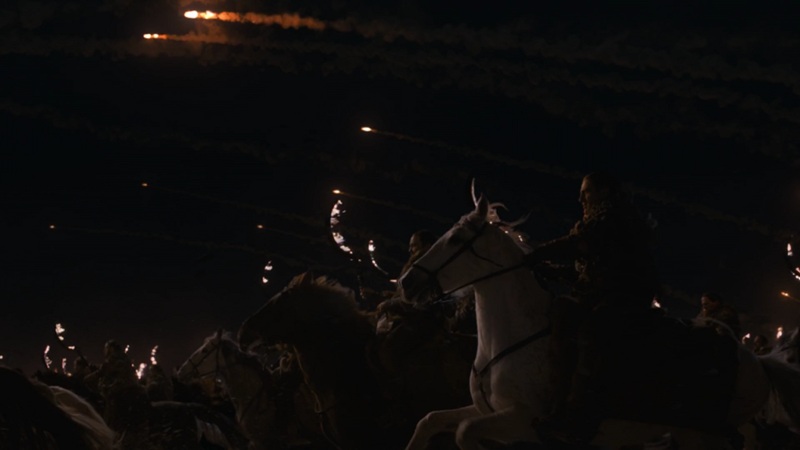
Dothraki charge

I love the way Game of Thrones S8E3 begins. Titled “The Long Night,” it’s suitably dark, there’s an unseen army of undead somewhere in the distance, and Samwell Tarly looks like he’s pissing himself in fear, not unlike how I feel about the potential death of the many major characters who are facing this threat, now surely devoid of plot armor as the series comes to a close.

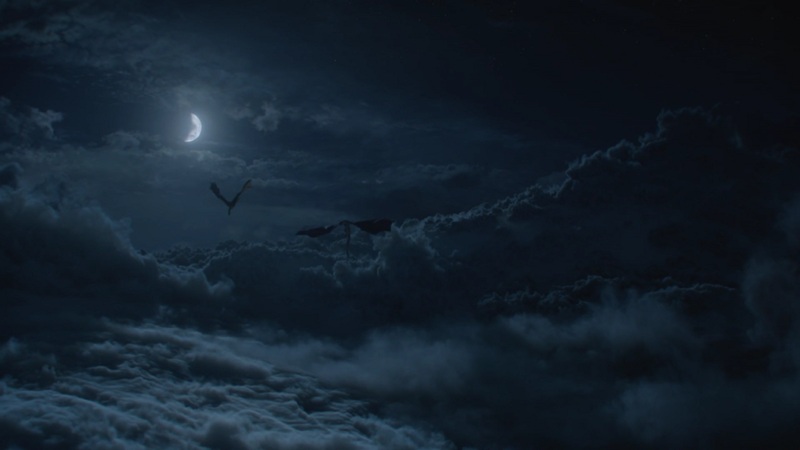
Then Melisandre appears, sets all of the Dothraki swords aflame, and they ride off into the dark unknown. It looks spectacular. I’m especially fond of the shot of the fiery boulders streaking above the Dothraki across the black sky, and the way all of their lights slowly go out. Only a few stragglers return, including Jorah, and the wights finally do their own bit of charging — and it’s utterly terrifying.

But while the charge is visually stunning (like the dragons flying above the cloud cover), it makes no tactical sense whatsoever. Why send the calvary ahead alone, with no support? It’s a suicide mission. Their mobility should be used to attack from the flanks. One could argue that the Dothraki, not exactly known for their orderly combat style, and spurred on by their new flaming swords, simply charge ahead regardless of any preconceived plans, but we get no reaction shots or lines to indicate this is the case.

Dragons above the clouds

Evidently, the Dothraki charge is an attempt at the Rule of Cool, a common film trope that involves showing something that makes little sense, but which the viewers will forgive because the result is “wicked sweet or awesome.” For me, I’m not sure it quite reaches that cool-enough threshold. The shots are amazing, yes (though a little dark), but I’m not sure I can forgive such a tactical blunder when the stakes are so high, and I certainly can’t forgive whoever had the idea to put the trebuchets ahead of the infantry lines, ensuring they can only ever be used once. Was Tyrion in the crypts during the entire planning phase as well?

Still, I thought the episode was off to a decent start. The charging wights look utterly unstoppable. They don’t so much run as they become a wave of living corpses, running and crawling atop of each other as they overwhelm everything in front of them (I was briefly reminded of Ralphzilla in Ralph Breaks the Internet). Those initial moments set the dire tone for the episode in a good way, and with several major characters in the front lines, I thought for sure it would be the end for a good number of them.

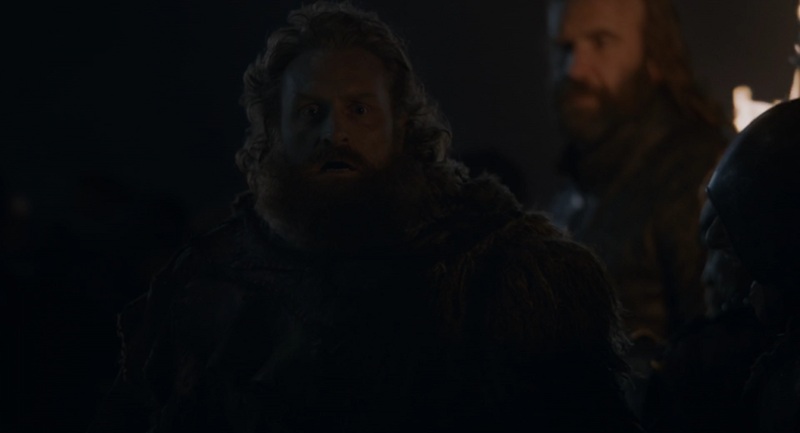
Tormund looking shocked

But it wasn’t (except, early on, for poor Edd, a lovable but minor character). Time and time again, named characters are saved from what seems like sure death, owing their lives to other named characters or, more often, to a timely cut. I recently read Stephen King’s Misery for the first time, in which the primary antagonist Annie Wilkes complains about stories that cheat. She describes how she used to watch serials until one ended in a cliffhanger that seemed to put a character in an impossible situation. She spent a week wondering how the character would survive, only for the next episode to resume with the character in a slightly different but much less compromising situation than the one he had actually been in. Instead of providing a solution, the serial had simply cheated and Annie Wilkes couldn’t abide the sloppy writing.

Unfortunately, it’s exactly that kind of cheating that “The Long Night” frequently relies upon. Excluding the Dothraki, Greyworm is one of several named characters at the front of the group that makes first contact with the wave of wights, who violently wash over him during their assault. Yet the next time we see him he is somehow fine, away from the action and organizing the retreat. At one point Jon is literally skipping over corpses as he tries to charge the Night King, ends up surrounded by them when they are raised, but the next time we see him almost all of those wights have been diminished to a much more manageable dozen or so — who are all, for some reason, only shambling instead of running as they were doing before. At some point, he even manages to stroll back to the castle alone.

Jon surrounded by wights

On countless occasions we briefly see Brienne, Jaime, Sam, Tormund, and other named characters in impossible situations, only for them to be fine or in a slightly different impossible situation the next time the camera cuts back to them. This is a strategy the show has already employed in previous big battles, and it goes on until the army is defeated. It’s not hard to guess why the show does this. If they put beloved characters in situations that do look manageable, we might have hope they’ll pull through. Instead, we’re supposed to think that this is it, this is the end for them. But you can only get away with letting our protagonists off the hook without a good explanation so many times, and by the middle of the episode, there had been so many cheated deaths that I eventually stopped feeling any fear that anyone important might die.

Plot armor is clearly not an issue isolated to Game of Thrones. In fact, one of the reasons the show became so popular was because it often subverted the expectation that protagonists will always survive. However, the less source material it has had to draw upon, the more the show’s heroes have seemed to get away with staying alive in the face of what, for anyone else, would amount to sure death. The show now seems to rely on the reputation it has built for not being afraid to kill off major characters to build tension, only to never actually kill them.

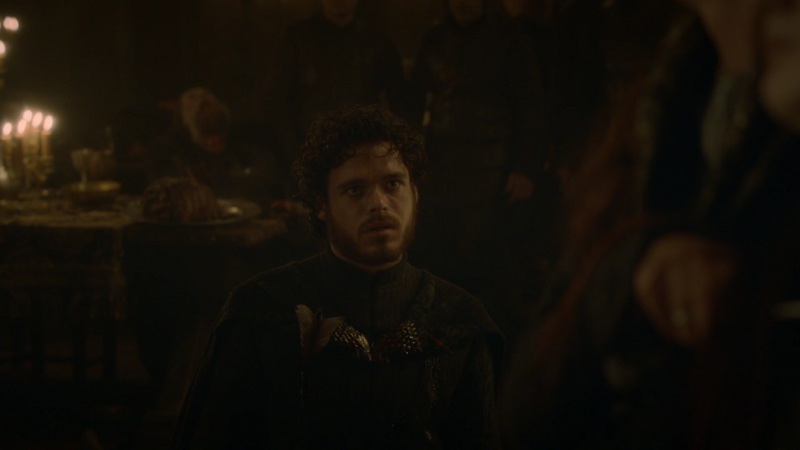
Robb on his knees

How the army of the dead is ultimately defeated is not satisfying, either. Of all the ways to wrap up the winter storyline, one-shotting the Night King to instantly destroy his army is one of the most cliche conclusions. This is the first battle south of the Wall between the dead and the living, and the living just win it all on their first encounter?

It’s true that the Night King’s ability to raise the dead means that any defeat for the living would make the next battle even less winnable, which is why I was a big fan of the theory that the Night King wouldn’t even be there. Rather, he would go to King’s Landing to get himself a few million wights, something our protagonists in Winterfell would only realize after winning a smaller, easier battle than they had expected. Then the true battle would come in episode 5, with the stakes higher than ever.

That is just one of many potentially interesting developments; instead we get yet another variant of the most overused battle plot of 21st century film, where the good guys seem totally overwhelmed and at the last second, the main bad guy or central network is destroyed and the entire enemy army is defeated at once. Even though they had hinted at this in previous episodes, I desperately hoped it wouldn’t come to that. But as the episode was building up to all of our characters facing imminent death at the same time, culminating with Jon facing the dragon, it seemed inevitable we were about to see something that would turn the battle on its head all at once.

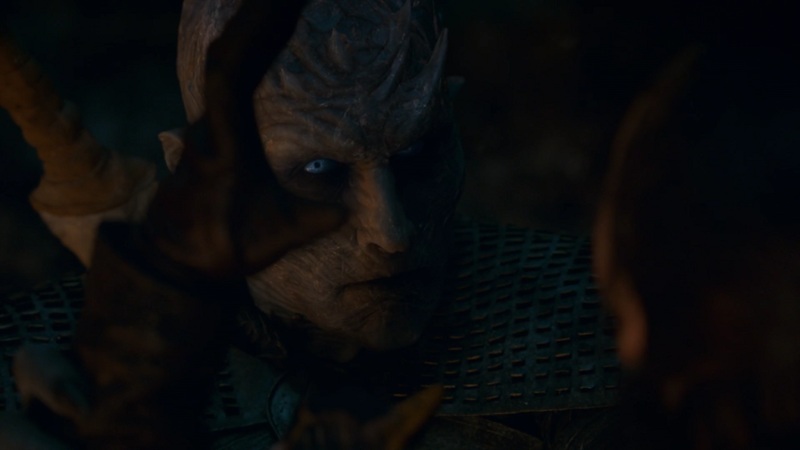
Night King holding Arya

Yet even then, I still didn’t expect someone would just kill the Night King. After all, that would have been too disappointing. Who would have guessed we would get eight seasons of build-up about the coming threat, only for the Night King to die outright before we have any chance to actually understand him or see him in combat?

Furthermore, it happens in an incredibly frustrating way. Arya materializes out of nowhere, having snuck past an entire army of wights and several White Walkers, and does with Valyrian Steel what Dragonfire could not, even though the former derives its potency from the latter. So not only does the army of the dead get Phantom Menaced, it happens with an unearned deus ex machina.

This is doubly disappointing because, once again, one of the reasons Game of Thrones is so successful is because it used to have a habit of undermining these kind of tropes. Take a look at this George R. R. Martin quote:

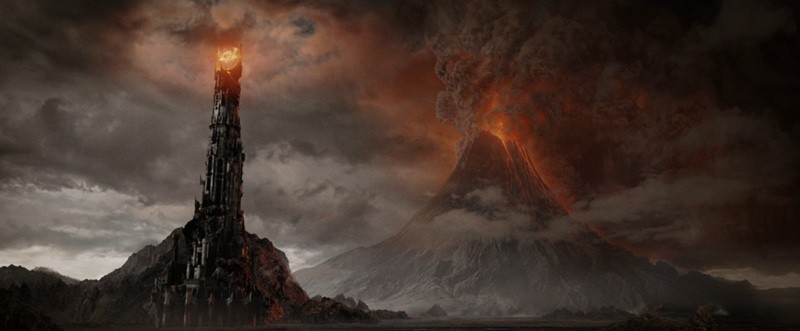
I admire Tolkien greatly. His books had enormous influence on me. And the trope that he sort of established — the idea of the Dark Lord and his Evil Minions — in the hands of lesser writers over the years and decades has not served the genre well. It has been beaten to death. The battle of good and evil is a great subject for any book and certainly for a fantasy book, but I think ultimately the battle between good and evil is weighed within the individual human heart and not necessarily between an army of people dressed in white and an army of people dressed in black. When I look at the world, I see that most real living breathing human beings are grey.

Eye of Sauron in Mordor

Yet ultimately, this is what we get: a dark lord and his evil minions. It’s telling that in the books, the Night King does not even exist. The undead are simply known as The Others and have no known leader. This new, mysterious threat presents titillating possibilities, and the world-building that takes place in earlier seasons seems to hint at a different motive than simply “kill all the living.” That the army of the dead is reduced to yet another trope is underwhelming to say the least. What is the point of Bran going north of the Wall? Of the Lightbringer prophecy? Of Jon’s resurrection? There is so much build-up surrounding the mythology of the White Walkers, only for it to end like … this? For Arya to get the killing blow on her first try, presumably because she’s the showrunners’ favorite character?

Though the final three episodes could develop this further, it seems more likely that “The Long Night” marked the end of the winter storyline as we now move on to dealing with Cersei. After several seasons of the characters insisting that the war for the Iron Throne is not important compared to the threat coming from the North, it’s disappointing that the former is what the series will conclude with. The Night King was supposed to bring perspective to Westeros. All of their political conflicts would seem petty in the context of the threat that he presented. Why bicker over the Iron Throne when death itself is knocking at the door? Instead, that his invasion was ended so quickly at Winterfell validates Cersei and others who did not take the threat seriously.

— Subscribe via RSS —