Formula 1

"Just an inshident."

Musings

Background

I have been an F1 viewer since 1998. I watched most races from then until the mid-2000s, at which point it became difficult to continue due to TV accessibility. Supporting Michael Schumacher was obligatory as far as my father was concerned, though that didn’t stop me cheering for Kimi Raikkonen, whose “Iceman” persona and electric driving were exactly what a teenager needed to stop seeing red.

After Kimi won in 2007, I watched a few races here and there but mostly fell out of touch with the sport. Eventually, I decided wanted to connect with it again. This happened to coincide exactly with the beginning of Sebastian Vettel’s streak of nine race wins in 2013, meaning I missed most of the years that modern F1 fans agree were the shit, only to get back in time for the worst period of dominance in the sport’s history.

Nonetheless, I haven’t missed a single race since then, have watched almost every qualifying session, and even wrote regularly about Formula 1 news from 2014-2023. Lately, I’ve also begun watching seasons I missed, starting with 2010. I already know all the highlights, but nothing beats seeing for yourself.

See all

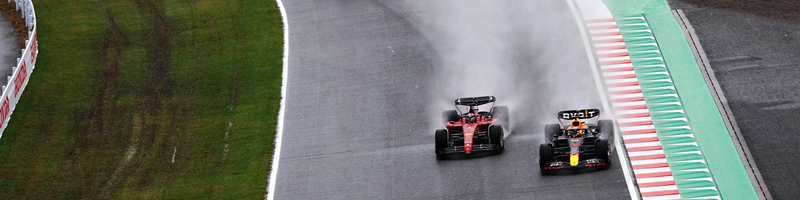
On Max Verstappen's cynical moves

#formula-1

Oct 30, 2024

In the wake of the 2024 U.S. and Mexican Grands Prix, where Max Verstappen made a handful of cynical defensive and attacking moves against title rival Lando Norris, I’ve seen a surprising level of support for the idea that Max is not a good wheel-to-wheel racer, and apparently never has been.

I’d agree that some of his moves are “dirty” — but to act as though they are a product of skill deficiency is a preposterous accusation.

Heading to Mexico, Max was ahead of Lando by 57 points, with five full races to go and two sprint races. In most seasons, this would be insurmountable gap to close, but in 2024, there’s more than a mere outside chance of it occurring. Lando’s McLaren is the fastest car on the grid, while Max’s Red Bull is third at best. If Lando finishes P1 with Max P4 in every remaining race, he’d win the title.

So Max is now in a similar situation as he was in the final rounds of the dramatic 2021 season: driving a slower car than his rival, and desperate to minimize the hemorrhaging. This is when his driving becomes “dirty” — when there’s a tactical advantage to it. When Max has a car capable of fighting for wins without an overwhelming disadvantage, his wheel-to-wheel driving tends to be impeccable. It’s really when he has no recourse other than desperate maneuvers that we see him make moves like in Brazil 2021 or Mexico 2024.

And at the end of the day, the moves hit their mark. At the Circuit of the Americas, Max actually extended his lead to Lando. And in Mexico City, even with a 20-second penalty, he still managed to reduce the point loss. There’s a good chance Lando would have won the race without Max holding him up the way he did. Had Max let him go on to win and finished P4 instead, the current gap between them would be 44 points. As it happened, Lando finished P2 with Max in P6. Fewer points for Max, but the gap is 47 points. And it could have easily been 50 points had Charles not been unlucky with backmarkers helping Lando catch him.

Formula 1 fans don’t seem to know what they want. When Lando races meekly, they complain that he doesn’t have the fight necessary to be a world champion. When Max races fiercely, they complain that he goes too far. Max just does what he needs to win, and that’s ultimately the goal of all F1 drivers — not to mention their job.

When a professional soccer player commits a tactical foul in the 90th minute to prevent an opposing player from scoring and eliminating their nation from the World Cup, we say, “Easy red, but fair enough.” Everyone understands he did what needed to be done for the greater goal. He’s not called sloppy or dirty. Max is doing the same, and part of the reason he’s paid $55 million a year is that he’s very good at it.
On F1 drivers' so-called supernatural reflexes

#formula-1

Sep 09, 2024

Formula 1 drivers are great athletes and deserve plenty of credit for their abilities. But one of those abilities is not fast reaction times, and it bothers me to no end that people continually act as though F1 drivers have supernatural reflexes. They have regular human reaction times like the rest of us, and the fact that people think otherwise says a lot about their misunderstanding of expertise in general.

The average person has a reaction time of 200-300 milliseconds. The Human Benchmark website says the average score on its reaction time test is 273 ms, though it likely skews high due to interface latency (with a high refresh rate monitor, I scored an average of 171 ms).

F1 drivers are in the same ballpark. The race broadcast often shows the time it takes for drivers to react to the starting lights, and the top starters are usually in the 200-250 ms range. Yet a lot of fuss is made about their reaction times, as though they’re part of what it takes to drive a twitchy, 200-mph racing car. And not only is that wrong, it undermines the actual skill that F1 drivers do have.

The true skill is anticipation, and accurate anticipation comes with expertise. All professional athletes seem to have incredible reflexes when applied to their discipline. That is the product of being expertly aware of many possible scenarios, and of being trained to act appropriately in these scenarios. This enables experts to be prepared to act when something does occur. To the untrained eye, that preparedness can very easily look like natural reflexes.

When a car unexpectedly comes across an F1 driver, and that driver seems to react with supernatural speed to evade the accident, a casual viewer may be stunned at the quick reaction. Yet that is only because the viewer is operating with far less information than the driver. The driver would have been far more likely to see the incident coming, due to his superior ability to read his surroundings and predict other drivers’ movements. In other words, he sees things that the casual viewer does not.

Casual viewers, blind to what they does not see, too often make the mistake of assuming they are operating on the same level of awareness as the driver. Thus they conclude that the driver’s superior ability to react to a situation comes from his superior reaction times, rather than his superior awareness of said situation. But in situations where just a few milliseconds can make a difference, if you are at the point of purely reacting, it probably means you weren’t paying enough attention to begin with, and you are already too late.

You can apply this to your own driving on regular public roads. If you are attentive to your surroundings and paying attention to other drivers, and if you have a good sense of how your vehicle behaves, how to control it, and how other vehicles can behave, then you will be much better at anticipating potential trouble; consequently, you will be a lot more adept at handling that trouble.

If your awareness helps you avoid an incident on the road with passengers on board, they might then commend you on your good reflexes, rather than the effort you put into being a good driver. This is because people have an inaccurate tendency to attribute skill to natural talent rather than to work and discipline. As mentioned above, this is because they can only see the situation from their own point of view — from the point of view of a layman, not from that of an expert who has put in the work. Therefore, in their shoes, to do what the expert seems to have done, it would have taken exceptional reflexes. But to do what the expert has actually done, it would take an entirely different brain.

On the absurdity of the Monaco Grand Prix

#formula-1

May 30, 2024

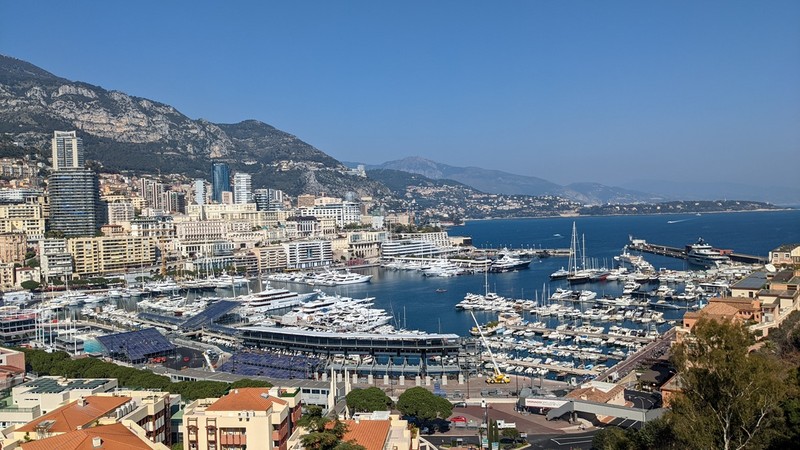
Monaco race course under construction

The Monaco Grand Prix is absurd. Every year, Formula 1 heads to this tiny principality near the south of France to race around a circuit it has long outgrown. There’s excitement in the air, even though the cars are too big and too fast for the narrow street track, and everybody knows it. It’s often called “the jewel in the crown” of motorsports, hailed as one of the most prestigious sporting events in the world. And even though the race is a snooze every single time, it somehow manages to retain its elevated status, like it has cast a spell on the whole of the F1 community and even beyond.

Nelson Piquet Jr, three-time champion, likened racing at Monaco to riding a bike inside your living room. This was in the ’80s, and the bikes have only gotten bigger since. At the 2024 Monaco Grand Prix that took place just last Sunday, there were only four on-track overtakes over the course of the 78-lap race, and none of them for points-scoring positions. It was like watching a soccer game where the goal had been substantially reduced in size, so the teams didn’t even bother getting the ball into the penalty area because they knew they’d never get it past the keeper.

The only positive outcome was that the likable Charles Leclerc finally took victory at his home race (it having unluckily eluded him twice before) and that Ferrari looked strong enough that it might give Red Bull Racing something to think about in the championship. But aside these silver linings, Monaco was a dull as can be.

And yet, before long, F1 will be looking forward to racing there again. That is how it always goes.

Like a fever dream

Every year, F1 arrives at Monaco with enthusiasm and leaves with disappointment. First, it simply beholds this sparkling city of billionaires, pinched between the foothills of the Alps and a surreally blue sea, as if in a sort of trance. Monaco is the type of city ruled by a man who goes by “His Serene Highness,” whose personal car collection is a museum, and who made a princess of an Olympic swimmer. Yachts glitter in the sun, moored by the racetrack, where mingle more A-listers than an ensemble summer blockbuster. Supermodels lounge on rooftops for the helicopter cameras. It’s all so glamorous, the refrain goes. Just thinking of it, you can practically hear the clink of champagne flutes.

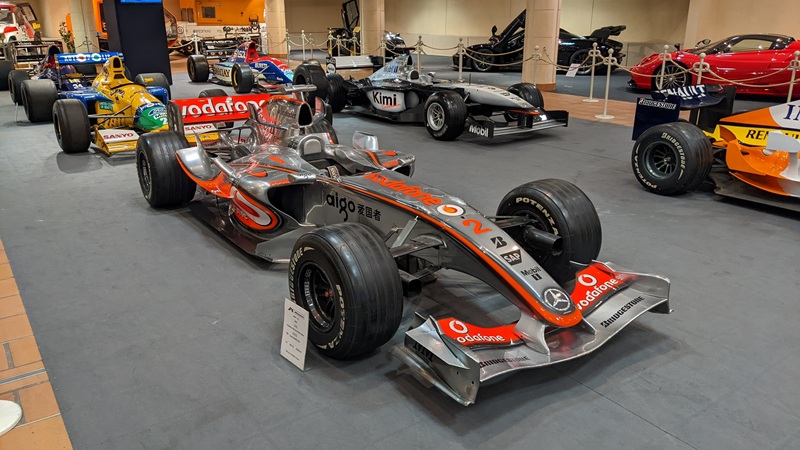
Prince's museum at Monaco

Then, after a few practice sessions, it begins: Qualifying. Broadcasters remind viewers that this is the true spectacle of the weekend, where drivers wrangle absurdly powerful cars on this too-narrow track, putting their wheels millimeter-close to the walls and often depositing some rubber on them. They do everything to set the fastest lap they can, which will determine the starting order for the race the next day. That’s the case for every grand prix weekend, but there’s a special, desperate quality to it on this day, as though all the drivers are trying just a little harder than normal. Of course, they are. It’s precisely because the Sunday race is guaranteed to be a procession that they put it all on the line in qualifying. It’s absurd, yet it only serves to enhance the strangely attractive uniqueness of F1 at Monaco.

And finally, the race. The lack of action is inevitable, yet everybody watches anyway, clinging on to the hope that maybe, just maybe, this time will be different. A lunge down the inside. A scrap in the tunnel. The sheer improbability of these things only heightens the anticipation that they just might happen, and that if they do, it will be truly epic. It’s hard to imagine where a pass could even take place, but surely, one of the world’s best drivers can think of something … right? Live commentators continually suggest a heroic move is, if not imminent, then at least possible — and later, post-race interviews encourage drivers to describe the excitement and challenge of the race, as though to assure viewers that what they’d just seen had, in fact, been absolutely thrilling.

In the following days, as though waking up from a fever dream, drivers and pundits and everybody in between will admit the racing hadn’t been good, and begin to speak of the need for change. They’ll say the cars should be smaller, the tires should degrade faster, that it simply can’t go on like this. Some may even dare ask: Should Monaco be on the calendar at all?

Then the year goes on and the race fades into memory. As if by magic, viewers return for the next season having seemingly forgotten about the previous one and all the sleep-inducing Monaco races that had come before — utterly ready and eager to go through the motions, all over again.

— Subscribe via RSS —