May 28, 2019
There is so much to criticize about the eighth and final season of Game of Thrones that after writing that long tirade about S8E03, “The Long Night,” I decided there was no point in making further posts about the remaining episodes, as their flaws would already be well explored by just about the entirety of the internet.
And indeed, the eighth season has already been pored over and meticulously picked apart to such a huge extent in the last few weeks that adding yet another rant about the whole thing seems like a waste of energy. However, I had begun writing this post the day after the finale and I’m not about to delete it, so I decided to limit it to addressing just one of my main gripes about S8E06, “The Iron Throne”: Jon’s fate.
Bitter, not sweet
Most Game of Thrones fans will have heard the claim that George R. R. Martin intended for the series ending to be “bittersweet.” Though the finale lacks just about anything sweet, I would not be surprised if Jon’s fate in the books is indeed planned to be about as bitter as in the show — with the crucial exception that it would be more understandable to the readers than it was to the viewers.
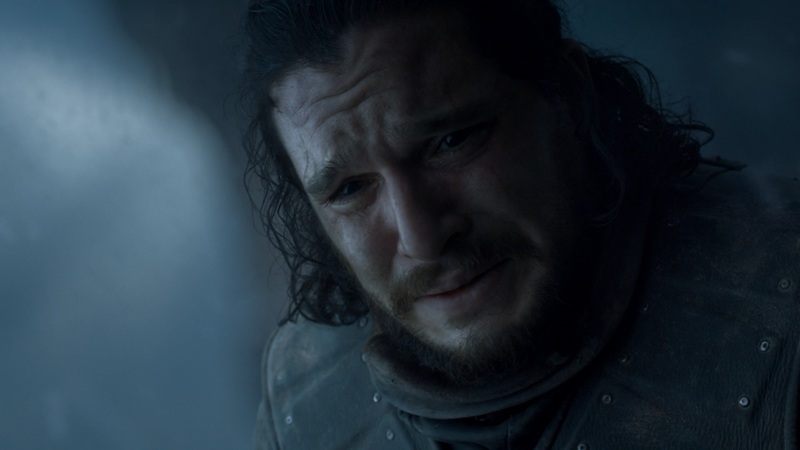
I think that by the end of the series, Jon is meant to be a broken man, or at least a very tired and disillusioned one. He fulfills the Azor Ahai prophecy that has him plunging his sword into the heart of the woman he loves to save the world, but the act of doing so shatters him. Exile, if self-imposed, would make some sense here.
Jon has obstinately toiled and self-sacrificed since the start of his story, even literally dying for a cause he believed in. He’s been in the thick of constant violence and death, and he’s tragically lost both of the women he has loved. It would not be surprising if, faced with a choice, he would want to finally have some peace away from all the war and the politics. He’s the Prince That Was Promised, not the king to be.
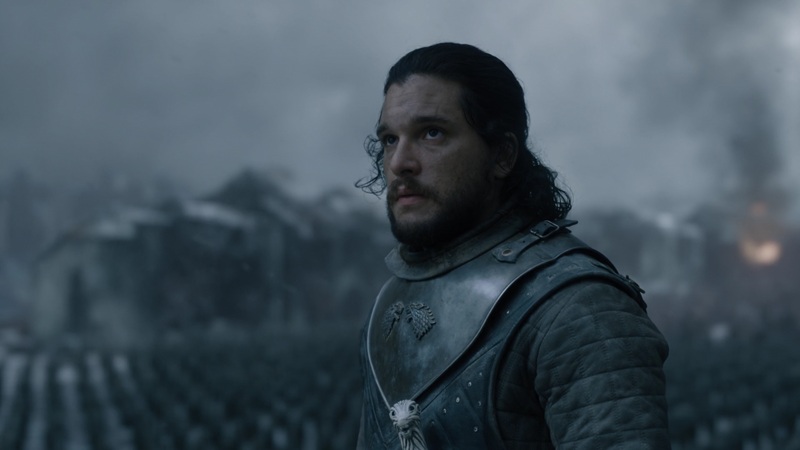
Unfortunately, not only does the show rob him of that choice for unbelievable reasons, it also makes no effort to make us understand his mindset. The love between Dany and Jon is poorly established, and the actors’ on-screen chemistry is lacking — it’s light years removed from the relationship between Ygritte and Jon earlier in the series. As a result, when Jon kills Dany, we don’t feel the full impact it should have on him.
The only indication we get of Jon’s inner turmoil is that he looks sullen all of the time. But this isn’t exactly a revelation: He’s been like that during most of the season even at the supposed height of his love with Dany; he is already known for brooding (Tyrion makes a dumb fan-service meta joke about this in Season 7); and crucially, Kit Harrington’s performance isn’t any different before and after he kills Dany.
Before the act his demeanor is largely muted, and after the act it follows the same pattern in the little screen time he gets. I understand that Jon was supposed to be in growing denial about who Dany reveals herself to be (leading to a confusing scene with Tyrion in which he leads by saying he won’t even try to defend her attack on King’s Landing, only to then immediately defend it), but throughout Season 8 as a whole Jon seems to have been completely sapped of any life and personality, though the latter can be applied to most of the franchise’s characters.
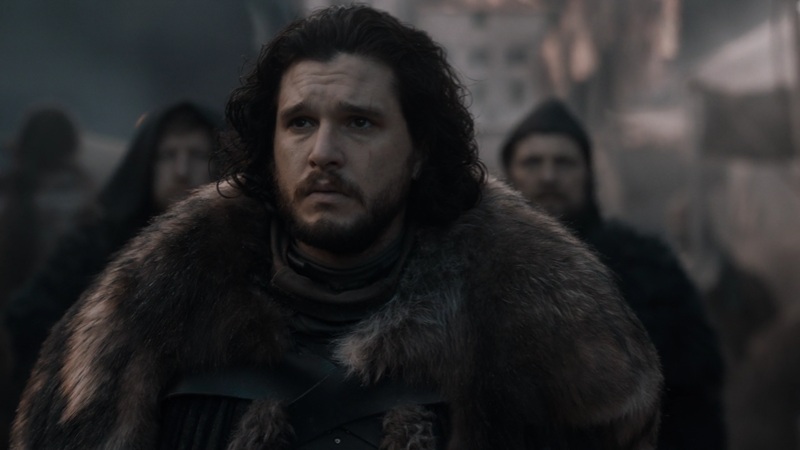
Presumably, before Jon kills Dany he is brooding because he feels conflicted about their relationship, then he is brooding because he is in denial of her increasing “madness,” then he is brooding because he knows he has to kill her, and finally he is brooding because he has killed her. All of this coming from a character who is generally broody to begin with. This means that outwardly, it’s difficult to grasp Jon’s emotional progression; how we started with someone who was King in the North and had a claim to the Iron Throne, to someone who would want to go into exile. Worse, we get absolutely no insight into what Jon thinks or believes after he kills Dany.
If Jon had merely been presented with a choice, it would have been an opportunity to show Jon’s mindset and motivations after fulfilling the Azor Ahai prophecy. But apparently, setting up Jon to choose exile and doing so in a way consistent with his character was a pointless endeavor from the perspective of writers David Benioff and D. B. Weiss, who instead came up with a bewildering alternative: Make him take the black. Send him back to the Night’s Watch and thus force him into exile instead.
Not only does this rob us of a good potential character moment, it makes absolutely no sense. What Night’s Watch? The men of the Night’s Watch are dead, the Wall is broken, and there’s nothing left to watch but the snow. Even the writers don’t seem to believe in their own excuse to send Jon away, because he never takes the black anyway.
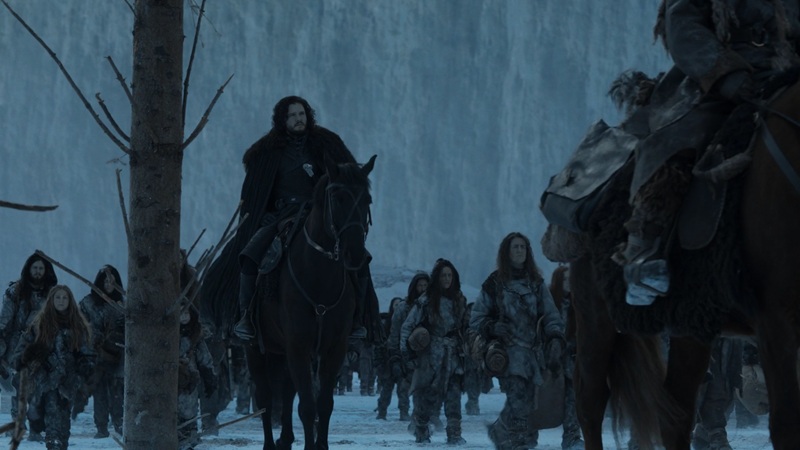
Instead, he goes straight beyond the Wall with the wildlings, which is also confusing. We spent seasons establishing that the wildlings want to come south of the wall, not just because of the Others but also because — surprise — living in a tundra sucks. Jon had even offered them lands when he convinced them to come to the Wall with him. Why in the world would they all go straight back beyond the Wall?
And finally, why would Jon have to go into forced exile in the first place? The only people who wanted him punished were the Unsullied — a small group of people who should be in no position to make demands. Not only are they the remainders of a tyrant’s army, they leave to Naath right away, presumably never to return. Is there anyone left in Westeros who wouldn’t want Jon around?
The man killed a mass murderer who he loved for the sake of the people. He should be hailed as a hero. There’s quite literally no reason he should be forced to take the black. Self-exile would have made some sense, but instead we got this rubbish.
This is all on top of the fact that Jon is still the rightful heir to the throne, which apparently no longer means anything because, supposedly, the “wheel” has been broken, even though it’s painfully obvious it really hasn’t been. But now I’m getting into other issues about the episode and the series, and I’ll just stop there.