Spectacle over plot
Apr 19, 2019
I love the way Game of Thrones S8E3 begins. Titled “The Long Night,” it’s suitably dark, there’s an unseen army of undead somewhere in the distance, and Samwell Tarly looks like he’s pissing himself in fear, not unlike how I feel about the potential death of the many major characters who are facing this threat, now surely devoid of plot armor as the series comes to a close.
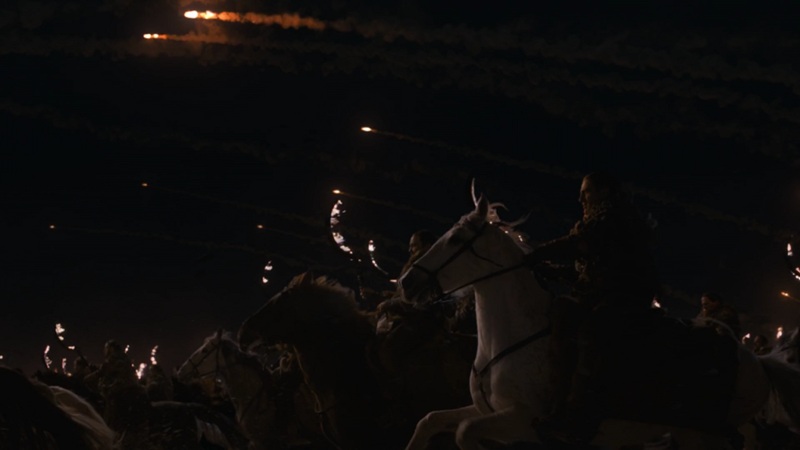
Then Melisandre appears, sets all of the Dothraki swords aflame, and they ride off into the dark unknown. It looks spectacular. I’m especially fond of the shot of the fiery boulders streaking above the Dothraki across the black sky, and the way all of their lights slowly go out. Only a few stragglers return, including Jorah, and the wights finally do their own bit of charging — and it’s utterly terrifying.
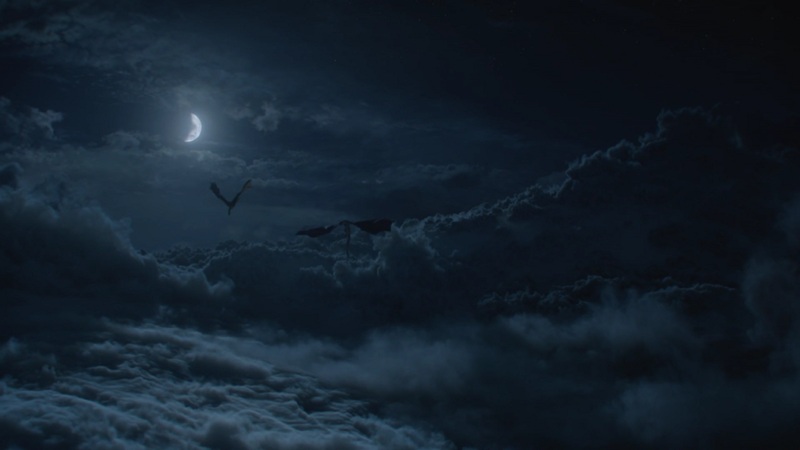
But while the charge is visually stunning (like the dragons flying above the cloud cover), it makes no tactical sense whatsoever. Why send the calvary ahead alone, with no support? It’s a suicide mission. Their mobility should be used to attack from the flanks. One could argue that the Dothraki, not exactly known for their orderly combat style, and spurred on by their new flaming swords, simply charge ahead regardless of any preconceived plans, but we get no reaction shots or lines to indicate this is the case.
Evidently, the Dothraki charge is an attempt at the Rule of Cool, a common film trope that involves showing something that makes little sense, but which the viewers will forgive because the result is “wicked sweet or awesome.” For me, I’m not sure it quite reaches that cool-enough threshold. The shots are amazing, yes (though a little dark), but I’m not sure I can forgive such a tactical blunder when the stakes are so high, and I certainly can’t forgive whoever had the idea to put the trebuchets ahead of the infantry lines, ensuring they can only ever be used once. Was Tyrion in the crypts during the entire planning phase as well?
Still, I thought the episode was off to a decent start. The charging wights look utterly unstoppable. They don’t so much run as they become a wave of living corpses, running and crawling atop of each other as they overwhelm everything in front of them (I was briefly reminded of Ralphzilla in Ralph Breaks the Internet). Those initial moments set the dire tone for the episode in a good way, and with several major characters in the front lines, I thought for sure it would be the end for a good number of them.
But it wasn’t (except, early on, for poor Edd, a lovable but minor character). Time and time again, named characters are saved from what seems like sure death, owing their lives to other named characters or, more often, to a timely cut. I recently read Stephen King’s Misery for the first time, in which the primary antagonist Annie Wilkes complains about stories that cheat. She describes how she used to watch serials until one ended in a cliffhanger that seemed to put a character in an impossible situation. She spent a week wondering how the character would survive, only for the next episode to resume with the character in a slightly different but much less compromising situation than the one he had actually been in. Instead of providing a solution, the serial had simply cheated and Annie Wilkes couldn’t abide the sloppy writing.
Unfortunately, it’s exactly that kind of cheating that “The Long Night” frequently relies upon. Excluding the Dothraki, Greyworm is one of several named characters at the front of the group that makes first contact with the wave of wights, who violently wash over him during their assault. Yet the next time we see him he is somehow fine, away from the action and organizing the retreat. At one point Jon is literally skipping over corpses as he tries to charge the Night King, ends up surrounded by them when they are raised, but the next time we see him almost all of those wights have been diminished to a much more manageable dozen or so — who are all, for some reason, only shambling instead of running as they were doing before. At some point, he even manages to stroll back to the castle alone.
On countless occasions we briefly see Brienne, Jaime, Sam, Tormund, and other named characters in impossible situations, only for them to be fine or in a slightly different impossible situation the next time the camera cuts back to them. This is a strategy the show has already employed in previous big battles, and it goes on until the army is defeated. It’s not hard to guess why the show does this. If they put beloved characters in situations that do look manageable, we might have hope they’ll pull through. Instead, we’re supposed to think that this is it, this is the end for them. But you can only get away with letting our protagonists off the hook without a good explanation so many times, and by the middle of the episode, there had been so many cheated deaths that I eventually stopped feeling any fear that anyone important might die.
Plot armor is clearly not an issue isolated to Game of Thrones. In fact, one of the reasons the show became so popular was because it often subverted the expectation that protagonists will always survive. However, the less source material it has had to draw upon, the more the show’s heroes have seemed to get away with staying alive in the face of what, for anyone else, would amount to sure death. The show now seems to rely on the reputation it has built for not being afraid to kill off major characters to build tension, only to never actually kill them.
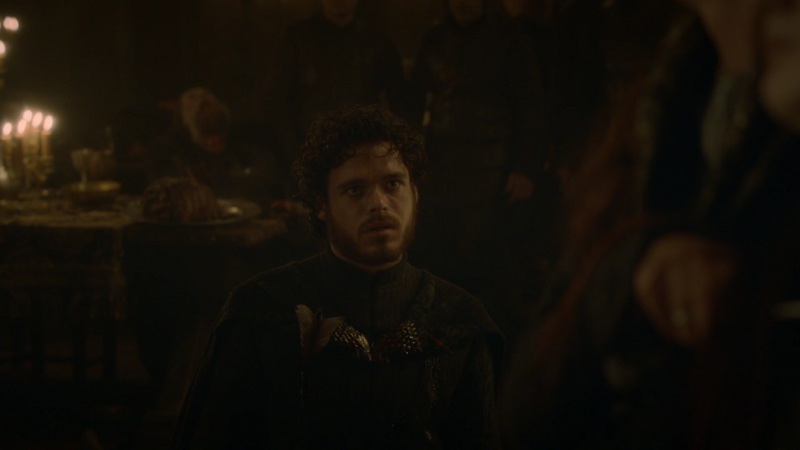
How the army of the dead is ultimately defeated is not satisfying, either. Of all the ways to wrap up the winter storyline, one-shotting the Night King to instantly destroy his army is one of the most cliche conclusions. This is the first battle south of the Wall between the dead and the living, and the living just win it all on their first encounter?
It’s true that the Night King’s ability to raise the dead means that any defeat for the living would make the next battle even less winnable, which is why I was a big fan of the theory that the Night King wouldn’t even be there. Rather, he would go to King’s Landing to get himself a few million wights, something our protagonists in Winterfell would only realize after winning a smaller, easier battle than they had expected. Then the true battle would come in episode 5, with the stakes higher than ever.
That is just one of many potentially interesting developments; instead we get yet another variant of the most overused battle plot of 21st century film, where the good guys seem totally overwhelmed and at the last second, the main bad guy or central network is destroyed and the entire enemy army is defeated at once. Even though they had hinted at this in previous episodes, I desperately hoped it wouldn’t come to that. But as the episode was building up to all of our characters facing imminent death at the same time, culminating with Jon facing the dragon, it seemed inevitable we were about to see something that would turn the battle on its head all at once.
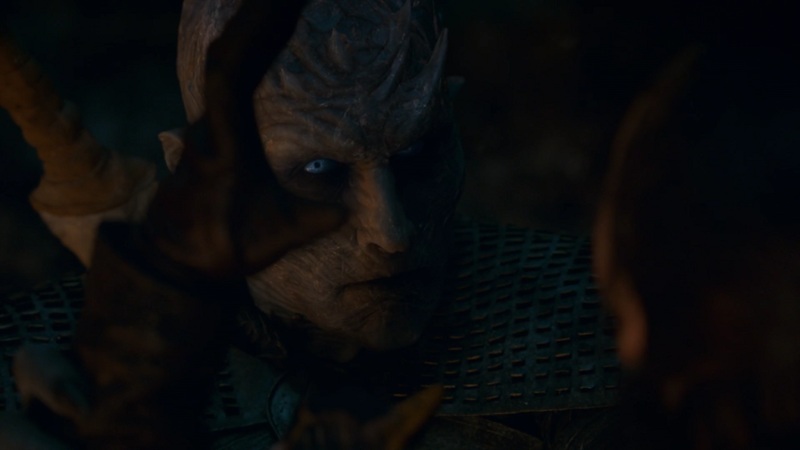
Yet even then, I still didn’t expect someone would just kill the Night King. After all, that would have been too disappointing. Who would have guessed we would get eight seasons of build-up about the coming threat, only for the Night King to die outright before we have any chance to actually understand him or see him in combat?
Furthermore, it happens in an incredibly frustrating way. Arya materializes out of nowhere, having snuck past an entire army of wights and several White Walkers, and does with Valyrian Steel what Dragonfire could not, even though the former derives its potency from the latter. So not only does the army of the dead get Phantom Menaced, it happens with an unearned deus ex machina.
This is doubly disappointing because, once again, one of the reasons Game of Thrones is so successful is because it used to have a habit of undermining these kind of tropes. Take a look at this George R. R. Martin quote:
I admire Tolkien greatly. His books had enormous influence on me. And the trope that he sort of established — the idea of the Dark Lord and his Evil Minions — in the hands of lesser writers over the years and decades has not served the genre well. It has been beaten to death. The battle of good and evil is a great subject for any book and certainly for a fantasy book, but I think ultimately the battle between good and evil is weighed within the individual human heart and not necessarily between an army of people dressed in white and an army of people dressed in black. When I look at the world, I see that most real living breathing human beings are grey.
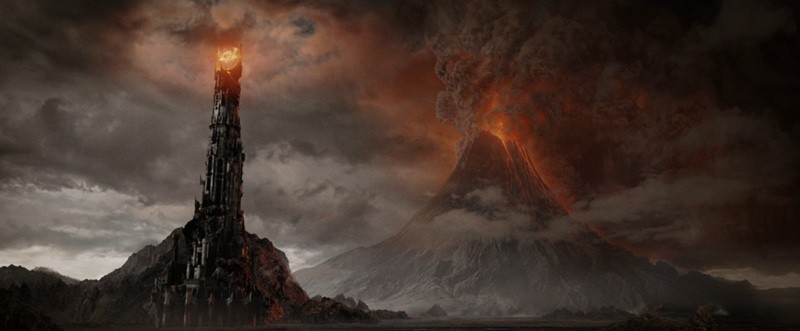
Yet ultimately, this is what we get: a dark lord and his evil minions. It’s telling that in the books, the Night King does not even exist. The undead are simply known as The Others and have no known leader. This new, mysterious threat presents titillating possibilities, and the world-building that takes place in earlier seasons seems to hint at a different motive than simply “kill all the living.” That the army of the dead is reduced to yet another trope is underwhelming to say the least. What is the point of Bran going north of the Wall? Of the Lightbringer prophecy? Of Jon’s resurrection? There is so much build-up surrounding the mythology of the White Walkers, only for it to end like … this? For Arya to get the killing blow on her first try, presumably because she’s the showrunners’ favorite character?
Though the final three episodes could develop this further, it seems more likely that “The Long Night” marked the end of the winter storyline as we now move on to dealing with Cersei. After several seasons of the characters insisting that the war for the Iron Throne is not important compared to the threat coming from the North, it’s disappointing that the former is what the series will conclude with. The Night King was supposed to bring perspective to Westeros. All of their political conflicts would seem petty in the context of the threat that he presented. Why bicker over the Iron Throne when death itself is knocking at the door? Instead, that his invasion was ended so quickly at Winterfell validates Cersei and others who did not take the threat seriously.